General informationNot tax or legal advice. The ATO’s overview of record-keeping rules is the place to check, and it suggests asking your registered tax or BAS agent if you aren’t sure how the rules apply to you.
Different records, different clocks
| Records | How long | Whose rule |
|---|---|---|
| Most records for tax, super and registration | 5 years, generally from when you prepared or obtained the record or completed the transaction, whichever is later | ATO |
| Records for a depreciating asset or a capital gains tax asset | Generally for as long as you have the asset, then another 5 years after you sell or dispose of it | ATO |
| Records used again in a later return, such as a carried-forward loss | Until the period of review for the later return has ended | ATO |
| Employees’ time and wages records | 7 years | Fair Work Ombudsman |
| A company’s records | 7 years, as the ATO notes ASIC requires | ASIC, via the ATO’s overview |
A selection. The ATO lists other records with their own start dates and longer periods on its records to keep for longer than five years page.
Which records go in the box? The ATO says the law requires you to keep records of every transaction that relates to your tax, super and registration affairs, and that a record should generally show the date, amount, description and GST information of a transaction, its purpose, and the relationship between the parties if relevant. For employees, the Fair Work Ombudsman lists what time and wages records must contain, from pay rates and hours to leave, super contributions and how employment ended.
The form they must be kept in
Whatever shelf or server they sit on, the ATO and the Fair Work Ombudsman ask much the same of a record:
- Unchanged. The ATO says the relevant information must not be changed and must be stored in a way that protects it from being changed or damaged. Time and wages records can’t be changed except to correct an error, and can’t be false or misleading.
- In English. Tax records must be in English or easily converted to English; time and wages records must be in English and legible.
- Findable. Time and wages records must be readily accessible to a Fair Work Inspector, and the ATO says you need to be able to show it your records if it asks.
- Readable later. If your record-keeping system changes over time, you must still be able to rebuild your original data.
Paper, scans and the cloud
A business’s system can be digital or manual, and the ATO recommends digital record keeping where possible. You can keep paper records as images on a digital storage medium, provided the copies are true and clear reproductions of the originals and meet the ATO’s five rules. Once the image is saved, you don’t have to keep the paper unless a particular law or regulation requires it.
Three details from the ATO that change what goes into storage:
- Typing a record’s details into accounting software is not the same as keeping the record: you still need a copy of the actual record, digital or paper.
- Paper EFTPOS merchant receipts can fade over time, so making a digital version of them is good practice.
- Cash register tapes can be thrown out after one month if you keep the Z-totals and have reconciled them against actual sales and the money banked; if not, you must keep the full rolls for 5 years.
If records are stored in the cloud, the ATO says to make sure the storage meets the record-keeping requirements, and to download a complete copy before changing software provider and losing access. If records are encrypted or password-protected, the ATO says to provide the encryption keys or the information on how to access them when asked, and to make sure data is identifiable, labelled or indexed as you store it.
Keeping the box safe
The ATO’s advice is to store business records securely and safe from theft, fire or flood damage, and to make regular back-up copies of electronic records and keep them in a safe place, preferably away from your business premises, or in cloud storage. You must also keep your computer system secure and be able to show control over who has access to it, incoming and outgoing information, and how information is processed.
If records are lost or destroyed and the documents were written evidence of expenses you want to claim, the ATO says you may still be able to claim certain deductions if you have a complete copy, or, without one, if it is satisfied you took reasonable precautions to prevent the loss and you show it isn’t reasonably possible to get a substitute document.
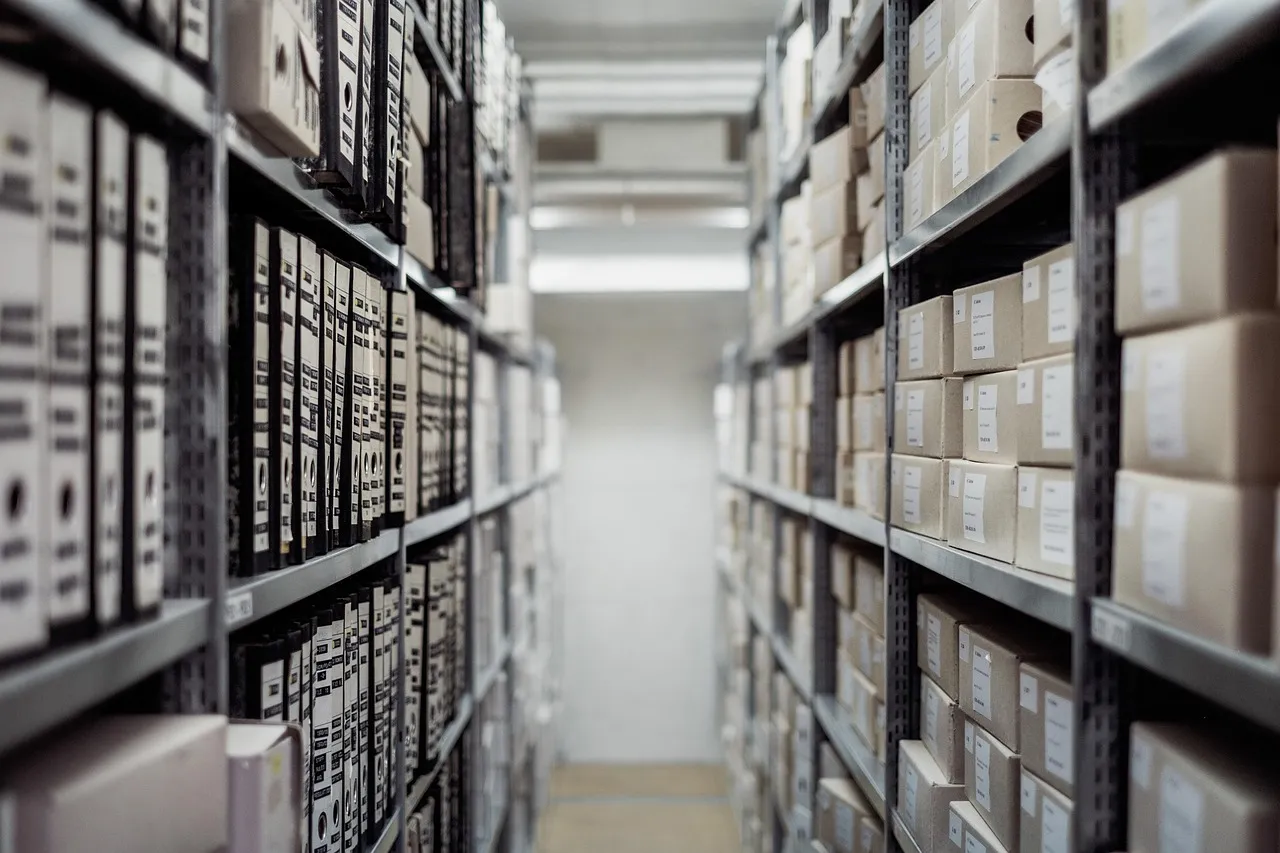
An archive shelf can carry the rules on its labels. As an illustration only:
- Contents
- Sales and purchase records
- Whose rule
- ATO: generally 5 years
- When the time is up
- Destroy as the written procedure says
- Contents
- Time and wages records
- Whose rule
- Fair Work: 7 years
- When the time is up
- Destroy as the written procedure says
- Contents
- Records of an asset still owned
- Whose rule
- ATO: while owned, then 5 years
- When the time is up
- Not yet: the clock hasn’t started
When the time is up
The ATO says that if you have routine procedures for destroying digital records, you need to keep all the information about them, and it may ask for documentation about your back-up and record destruction procedures.
Many records hold personal information about staff and customers. Most small businesses, those with an annual turnover of $3 million or less, are not covered by the Privacy Act 1988, but some are, and the OAIC has a checklist to find out. A business that is covered must take reasonable steps to destroy or de-identify personal information it no longer needs for any permitted purpose, unless an Australian law or a court or tribunal order requires it to be kept. The OAIC says this includes all copies, including archived copies and back-ups.
The OAIC’s examples of technical measures are shredding, disintegrating and pulping, sanitisation of hardware, and de-identification techniques; its examples of organisational measures include staff training, policies for deciding what to keep, and checking and recording what personal information was destroyed or de-identified, and when.